


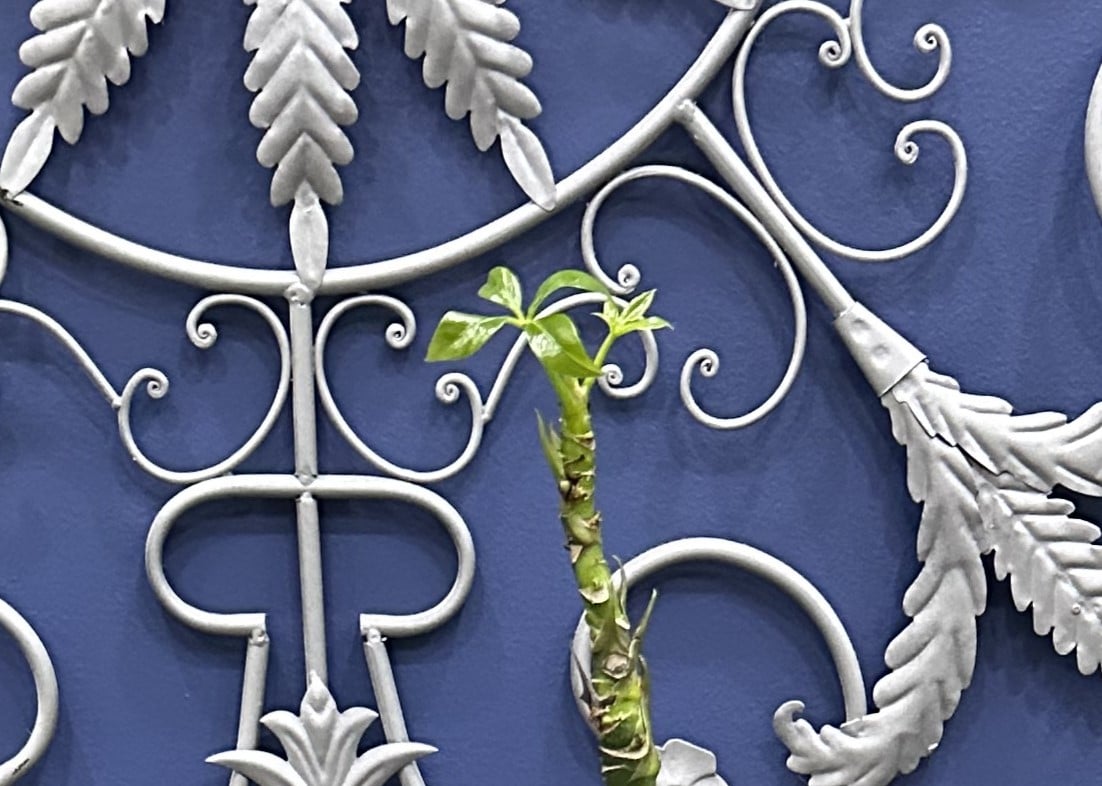

Blaine’s struggling money tree reminds us that growth returns when we make room for it.
Hello, fellow lovers of all things green,
Last week’s yellowing fiddle-leaf fig and mealybug dilemmas led me to yet another houseplant in distress. Blaine Rothauser, a remarkable photographer and naturalist whose artful images have graced many of our column chats, reached out about his money tree, which had declined markedly. He sent a snapshot of his leafless plant, but the stems were still green, offering hope that it could recover. My quick response to Blaine was that his plant needs a new pair of jeans, making room for growth.
Perhaps it’s no coincidence that Money Trees, also called Money Plants (Pachira aquatica), are long associated with abundance and renewal. Other common names include Water Chestnut, Guiana Chestnut, and Malabar Chestnut.
The Meaning and Legend of the Money Tree

Ruth and Jim’s Happy Money Tree
Legend has it that a poor Taiwanese farmer first discovered the unusual yet attractive Money Tree growing in his field. Taking it as a sign, he dug it up and brought it home, where he found it required very little care. He began propagating and selling the trees at the market. They were an enormous success and brought him the affluence he longed for—hence the Money Tree’s association with wealth and prosperity. Still, life is about far more than money. True abundance comes from serving others.
Cold Feet and Winter Storage Lessons
Blaine had stored his money tree in his garage over winter, which usually stays around 50 degrees—risky for tropical plants. Ideally, money trees prefer temperatures between 65 and 80 degrees and should be kept away from drafts and heating vents. Temperatures below 50 degrees can damage the plant. Nor do they like cold feet. There’s a money tree at my hair salon that was struggling badly. I suggested lifting it off the concrete floor. Once placed on a stand, it began to flourish.
Repotting a Root-Bound Houseplant
To restore Blaine’s money tree, which had become too tight in its pot, meaning root-bound, it needs to be repotted in a slightly larger container using fresh, well-drained soil. By the way, this is a universal technique for most plants, except for soil type, which depends on the plant. Most houseplants prefer an all-purpose mix, while succulents and tropical plants like money trees prefer sandy, fast-draining blends labeled cactus or succulent mixes, and orchids require bark-based media.
First, choose a pot that’s one to two inches wider than the old one. Bigger is not better. Money trees prefer properly fitted shoes; too much surplus soil can hold excess moisture and cause root rot. Water the plant in a sink with room-temperature water—or better yet, rainwater or snowmelt—until water runs through the drainage holes. Let it rest for a day, then run a knife around the pot to loosen the roots clinging to the sides. Carefully pull the plant out from the lowest point near the soil.
Caring for Roots: Loosening What’s Too Tight
Once removed, the roots will likely be tightly tangled. Use your fingers to gently tickle them loose. If needed, make quarter-inch vertical cuts with a utility knife and remove damaged roots. Sterilize the blade with rubbing alcohol first.
Add one to two inches of cactus or succulent soil to the bottom of the new pot. A 50–50 blend of regular potting soil with perlite or orchid bark also drains well. Place the plant so the root ball sits about an inch below the rim, then gently add moist soil without over-compacting.

Ruth’s nifty watering technique uses a flexible hose attached to a nearby sink.
Watering, Light, and Ongoing Care
After repotting, water again until it drains freely. Be sure the pot has drainage holes—this is a must. Once drained, return the plant to its saucer so it doesn’t sit in water. Place your money tree in bright, indirect light and resume regular watering. Follow the protocols for the amount of light for other houseplants.
For most plants, allow the top three-quarters of the soil to dry before watering. Inexpensive moisture meters help remove the guesswork. Typically, watering every two weeks is sufficient, though dry winter air may require adjustments.
Lessons for the Garden of Life
Hopefully, your money tree will rebound, Blaine. And for those of you with plants—or lives—that feel a bit too tight in their jeans, the same principles apply. Loosen what’s tight, refresh the soil, give light to where it’s needed, and trust that growth knows how to return slowly, quietly, faithfully.
When life feels uncertain, tending a struggling plant reminds us that recovery is possible—that something seemingly hopeless can leaf out again.
Garden Dilemmas? AskMaryStone@gmail.com or tune in on your favorite Podcast App.
There’s more to this story in the Garden Dilemmas podcast, where the plant lesson unfolded alongside a personal season of change:
Related Podcast and Posts you’ll enjoy:
When Fiddle-Leaf Figs Turn Yellow
Ep 146 Money Tree-Houseplants in Duress
A Money Tree Brings Abundance – Blog Post
Ep 237. Roofs to Roots: Reviving Houseplants
Harvesting Rainwater & Snowmelt Wisdom – Blog Post


