


Hello fellow lovers of all things green,
To weed or not to weed knotweed? That was the question—or should I say complication—after working in my dear client Karen’s garden.
Japanese knotweed and I go back a ways. In a September 2018 column, September Roadside Beauties, I admired its showy white, lacy flowers while acknowledging its aggressive ways.
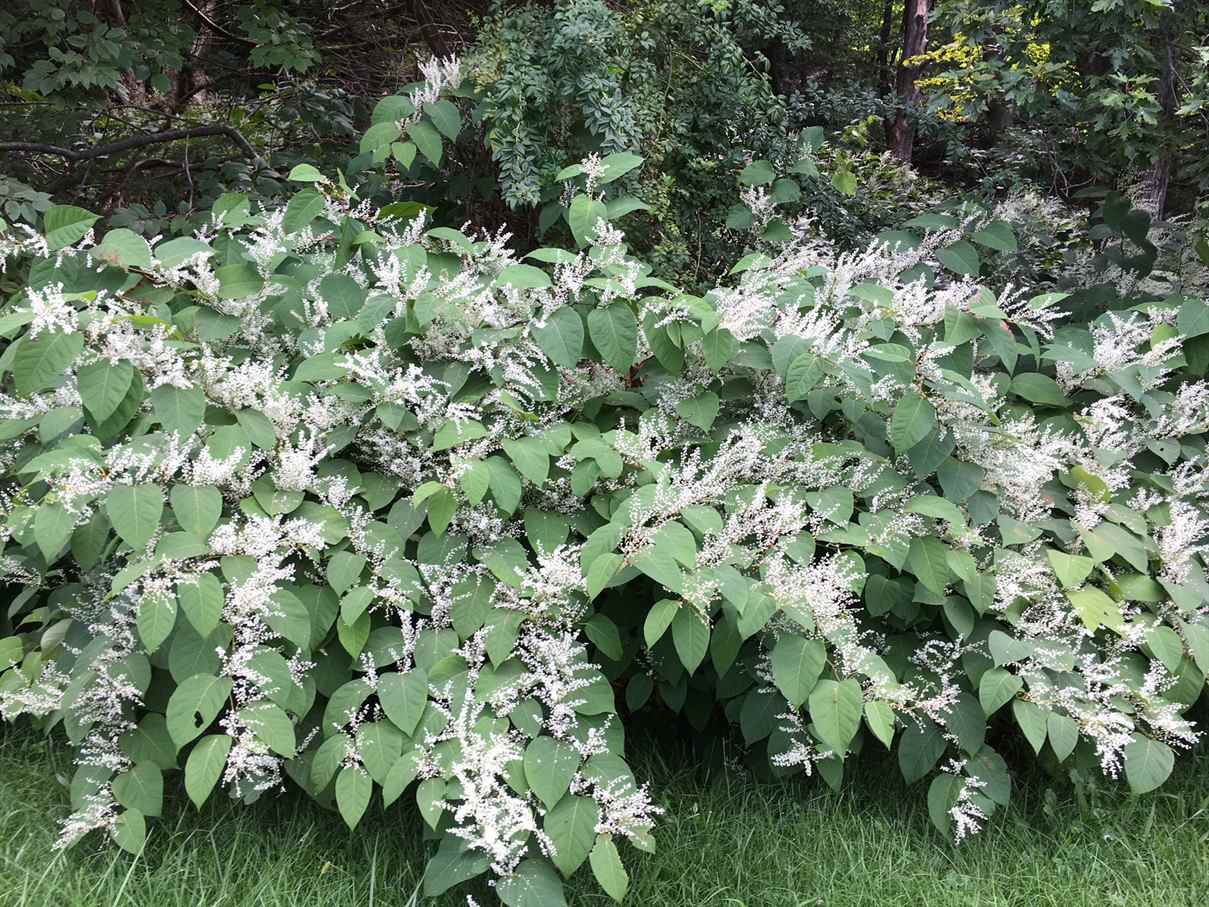
Japanese knotweed (Reynoutria japonica), also called Asian knotweed, tells its origin. Though shrublike, it isn’t woody but a hefty herbaceous perennial in the buckwheat family. Its hollow stems look bamboo-like and grow ten to thirteen feet tall.
Some call it Fleece Flower, Monkey Weed, or Donkey Rhubarb. They say it tastes like very sour rhubarb, and you’d have to be dumb as a donkey to eat it. The thing is, donkeys aren’t dumb. They are pretty smart but indeed stubborn. But we can’t blame an animal for digging in its heels to protect itself.
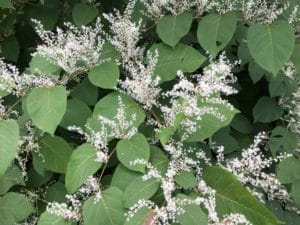
Japanese knotweed’s showy white flowers attract pollinators in late summer and fall—one of the qualities that first caught my eye.
Showy sprays of white flowers cover the colonizing plants from late summer into fall. Pollinators adore the plethora of plumes when not much else is blooming—the buzz catching the attention of passersby.
Beautiful, yes. But I’ve learned much more about this beauty since then.
A Neighbor’s Persistence Pays Off
Four years later, I came upon my new neighbor Susan fervently pulling knotweed from the construction site of the home she and her husband were building. Jolee and I often stopped to visit.
Susan pulled and pulled, determined to rid the property of the colony I once admired along the roadside. I remember watching her persistence and thinking, goodness, that’s a lot of work.
But she kept after every new shoot that appeared, again and again.

Success through persistence. Susan’s knotweed is gone!
And Susan got rid of the knotweed completely.
Which brings me back to Karen’s garden.
When Weeding Became a Dilemma
Knotweed had taken hold along one side of Karen and her husband Jeff’s lake property. Like me, Karen prefers avoiding chemicals when possible, but she’d hired a company to cut and treat the knotweed with glyphosate. The treatment knocked it back dramatically, though new plants eventually emerged.
We were working along the lake, adding Tiarella, assorted ferns, and columbine beneath a colony of rhododendrons that had been there for years.
Toward the end of the day, I wandered over to the knotweed area and started pulling. I was in a zone, you could say—kind of on autopilot. And you know how it is when you start weeding. One weed leads to another.
It was surprisingly satisfying. Most came out easily with long stretches of root attached. A couple of them had shoots coming from a larger, established root system below, but overall, the area cleaned up beautifully.
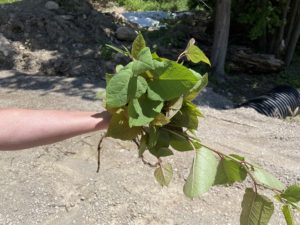
The knotweed pulled surprisingly easily—but the extensive rhizomes below ground are another matter.
Then came the dilemma.
I learned afterward that Karen had been waiting for a particular treatment window and had another herbicide treatment planned. I didn’t know that. Had I known, I wouldn’t have gone into weeding autopilot. I felt bad that I hadn’t asked first.
Karen’s concerns sent me researching, too. As so often happens with garden dilemmas, the answer isn’t as simple as it first seems.
Can Pulling Japanese Knotweed Work?
Japanese knotweed’s extensive underground rhizomes make established colonies notoriously difficult to eradicate. Chopping off the tops won’t do it, and carelessly moving rhizome pieces to new soil can spread the plant.
But nonchemical management is possible.
University of Maryland Extension advises repeatedly removing every new shoot before it can replenish the underground rhizomes. Over time, that can exhaust the plant, though it may take years. Digging rhizomes and long-term smothering are other strategies.

A young Japanese knotweed shoot demonstrates why follow-up is essential. New growth can emerge from the extensive rhizome system underground.
The important word is repeatedly.
Susan didn’t yank the knotweed once and declare victory. She was relentless, removing new growth again and again until the colony surrendered.
And disposal matters. Knotweed cuttings shouldn’t go into the compost pile, where viable pieces could potentially establish elsewhere.
Karen’s situation is different because her knotweed was already professionally treated, and what I pulled was greatly diminished regrowth.
There’s another complication, too. A colony is forming on the neighboring property and may even have been the origin of hers. If it remains unaddressed, it could become an ongoing source of reinvasion. That’s true whether the knotweed is managed through persistent removal, chemical treatment, or a combination of both.
Can Knotweed Damage a Home?
Then came another concern. Karen had read that Japanese knotweed could damage foundations and even create problems insuring a home. Well, that sent me down a rabbit hole.
Some truth is tangled in the fear, but the story is more complicated than some of the alarming things you can find online.
Much of knotweed’s notorious reputation regarding homes comes from the United Kingdom, where the issue has centered largely on mortgage lending and property values rather than homeowners insurance. There was a period when some British lenders wouldn’t provide mortgages on properties affected by Japanese knotweed.
More recent research by the University of Leeds and AECOM found that the risk of serious structural damage had been overstated. Where damage occurs, knotweed tends to exploit existing weaknesses rather than break through sound structures.
The Royal Institution of Chartered Surveyors (RICS) subsequently revised its guidance, moving toward a more measured assessment based on actual damage and whether knotweed interferes with the use of the property rather than whether the plant is present.
In other words, knotweed needs attention—but not panic.
Learning From the Undesirables
One thing I’ve learned since admiring those September roadside beauties eight years ago: Nature rarely fits neatly into good and bad categories.
Japanese knotweed behaves terribly underground, much like mugwort (Artemisia vulgaris) and other invaders that can make gardeners want to pull their own hair out along with the weeds. Yet knotweed feeds pollinators when not much else is blooming. Even its hollow, dried stems remind us of the kinds of cavities solitary, tunnel-nesting native bees use for nesting. None of that makes Japanese knotweed a plant we want in our gardens—that’s for sure.

Japanese knotweed’s hollow, bamboo-like stems remain standing after the growing season.
But even the undesirables can teach us something.
Susan taught me something through her persistence. Karen taught me something by questioning what I had done and inspiring me to dig deeper into the research.
And I learned something about myself, too. I should have asked before I started pulling. I hadn’t realized Karen planned another treatment. Garden stewardship is also about communication, especially when we’re caring for someone else’s garden.
Sometimes the answer to a garden dilemma isn’t fear—or even certainty. It’s paying attention, remaining curious, learning more, and being willing to change course when we learn something new.
And yes, sometimes it’s patiently pulling the undesirables. The same is true in our Garden of Life.
Garden Dilemmas? AskMaryStone@gmail.com or tune in on your favorite Podcast App.
Prefer to listen? 🎧
Hear more of the story—including the Screen Porch conversation that inspired this post:
Related Stories
September Roadside Beauties — September 2018
Knotweed Meets Crown Vetch — June 2022, including Susan’s battle with Japanese knotweed
Also featured in Episode 62 – Rethinking Weeds & Invasive Plants
Weeding Mugwort – Picking up Litter — July 2022


