


Hello fellow readers,
I love questions on things I wish to learn more about. Gloria of Columbia, NJ, has enjoyed her Lady Slipper orchid for 23 years. She divided it recently, and the twins are now beginning their bloom cycle. However, some of the leaves are turning yellow, and Gloria is concerned about whether she’s overwatering.
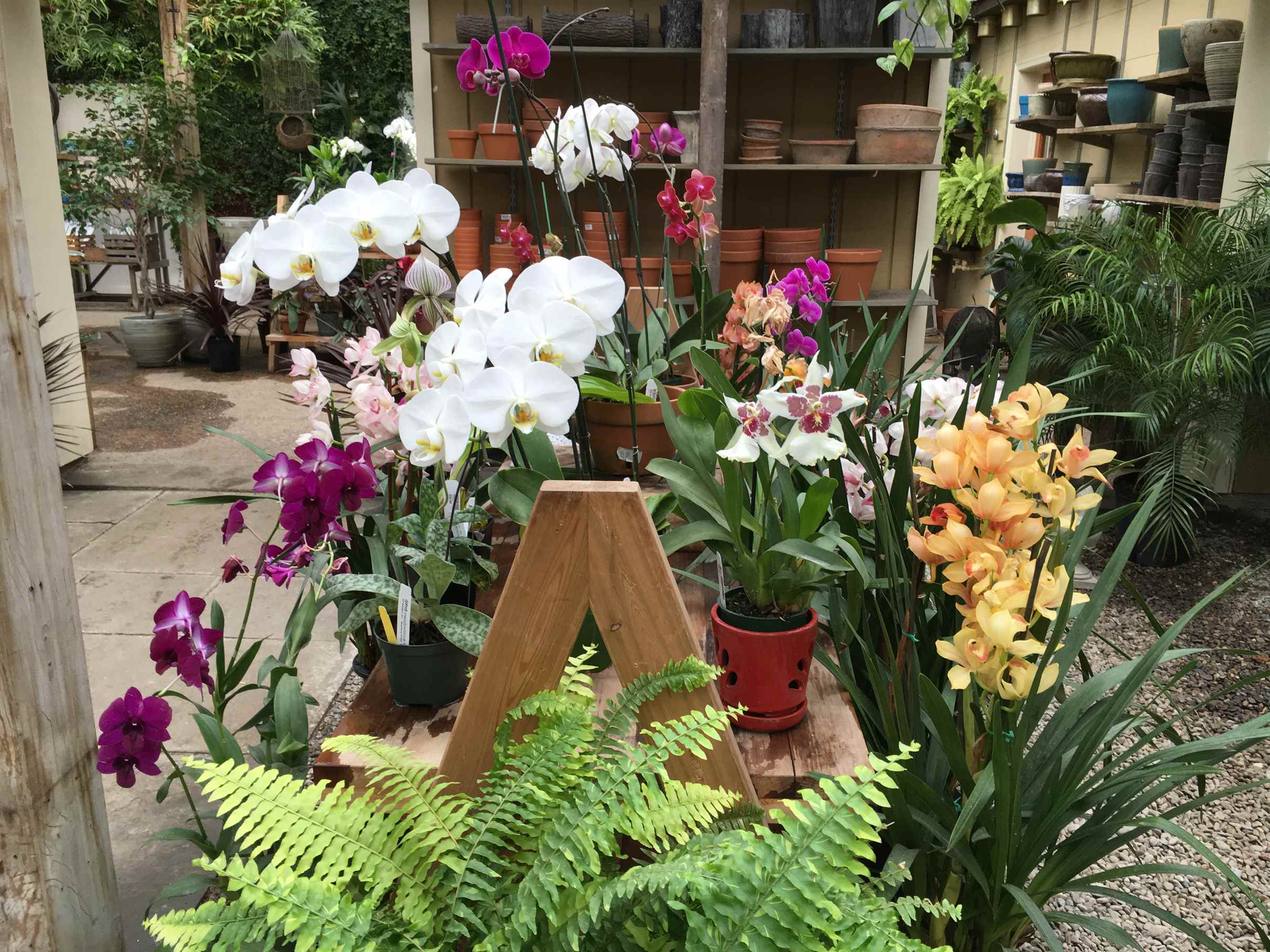
Orchids originate from the days of the dinosaurs. Their delicate, somewhat prissy appearance suggests they are fussy to take care of. In truth, many are easy keepers. Lady slipper orchids are one of the simplest orchids to grow. Other easy keepers are the Cattleya group, with medium- to large, brightly colored flowers, and Moth orchids, which produce sprays of glorious blooms.
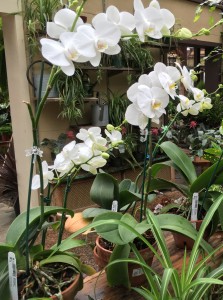
Moth Orchid
Watering is one of the trickier yet most important cultural practices. Allow the potting mix to dry out completely before watering, then water until it runs out of the bottom of the pot. No sitting in water, though. Humidity trays or gravel on saucers can catch excess moisture and help maintain the preferred 50% humidity.
It’s from the new growth that new blooms come, so Gloria’s orchids sound healthy. The yellowing leaves are likely the normal shedding of old leaves. You can let them die back naturally or cut them off with a clean utensil to prevent disease. If the yellowing leaves have dark, slimy spots, it’s cause for concern that there’s a fungus or bacteria among us.
Orchids at shows or public gardens such as Longwood Gardens in Kennett Square, PA, or the New York Botanical Gardens in the Bronx, NY, remind me of fine art on display at a museum. It’s the time of year to indulge in orchid shows as their peak bloom times are typically winter to late spring.
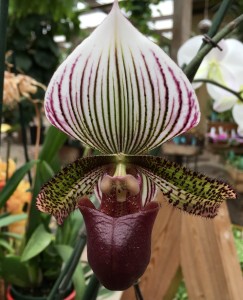
Lady Slipper Orchid
In their native environments, orchids are often seen growing on trees. They’re not parasites, though; they’re merely using the trees as hosts. They have very cool reproductive ‘systems’ too; beyond the standard lures of color and fragrance. For example, the Bee Orchid (Ophrys insectifera) has flowers that mimic a receptive female bee, tricking the male bee to come hither (whoops, we’re G-rated).
Lady’s slipper orchids attract pollinators with their scented flowers, which have slippery edges that lead to pouches that trap the insect. The pollinator becomes too wet to fly out, or the space is too tight, forcing Mr. Unsuspecting to exit in such a way that triggers pollination. How stealth!
Garden dilemmas? askmarystone@gmail.com
The American Orchid Society offers an article titled “Orchids 101” that covers the basics of growing orchids.
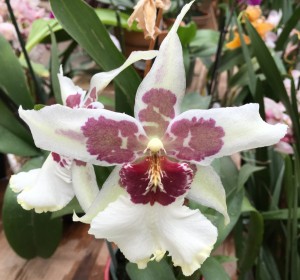
Miltoniopsis Pansy Orchid
About the photos: I had the privilege of visiting Meadowbrook Farms, located just north of Philadelphia in Abington Township, where I took these photos. Affiliated with the Pennsylvania Horticultural Society, Meadowbrook Farms is known for its part in forcing flowers and plants to bloom in time for the Philadelphia Flower Show each year. My colleague and friend, Marty Carson of Three Seasons, also uses Meadowbrook to propagate her plants for the Springfest Garden Show coming soon: March 17 through 20th, 2016. See you at the show!


One useful refinement is that the safe dry-down depends on the orchid group and its medium. Many Paphiopedilum lady’s slippers have fine roots and generally prefer the mix to approach dryness without becoming bone-dry for long, while a bark-grown Phalaenopsis can usually dry further between thorough waterings. Pot weight and the condition of roots inside the pot are more reliable than the surface alone. For yellow leaves, location and texture help separate normal aging from a root-zone problem: one oldest lower leaf yellowing evenly while new growth and roots stay firm is often routine; several leaves yellowing together, especially with soft roots or sour-smelling mix, deserves inspection before fertilizing or cutting. Dark wet lesions that expand are different from a dry stable mark, so I would isolate the plant, photograph the edge, and watch progression rather than assuming every spot is fungal. I work on KnowYourPlant, and our orchid yellow-leaf guide expands this symptom-first checklist: https://knowyourplant.app/blog/posts/orchid-leaves-turning-yellow/ Sterilizing the cutting tool between plants is also important if a damaged leaf truly needs removal.
Hi Johnny,
Thank you for adding this helpful clarification. You’re quite right that watering and dry-down needs vary considerably among orchid groups and growing media. Your point about looking at the condition of the roots as well as the leaves is especially useful. I appreciate you contributing your experience to the conversation.
Mary